Simple Foam Dressing – DG Derm
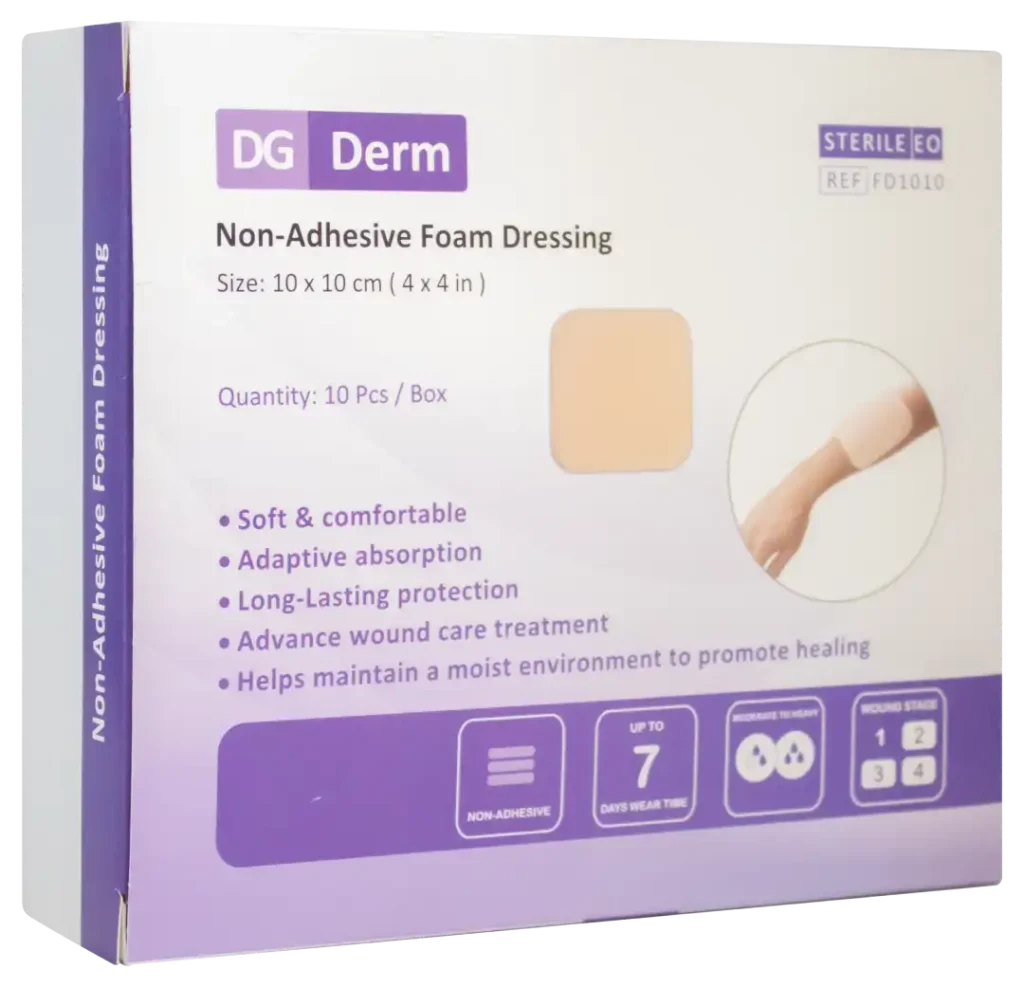
This product is one of the most important and effective dressings for accelerating the healing process of exudative wounds. Due to its special properties, it is widely used, particularly for preventing damage caused by traditional dressings and reducing pain associated with wound care.
The DG Derm non-adhesive foam dressing can be used for a wide range of exuding wounds, including leg ulcers, pressure ulcers, non-infected diabetic foot ulcers, second-degree burns, donor sites, post-surgical wounds, and skin abrasions. This dressing is made of polyurethane and is suitable for moderately to heavily exuding wounds. In general, it is intended for chronic wounds and is not recommended for dry or low-exudate wounds.
Mechanism of Action of the Simple Foam Dressing
This non-adhesive foam dressing contains a polyurethane foam pad that vertically absorbs excess wound exudate and retains it within its three-dimensional structure. The pad contains numerous pores that trap exudate in such a way that even when pressure is applied to the dressing, the fluid is not released or pushed back out.
The outer surface of the dressing is covered with a semi-permeable layer that allows evaporation and gas exchange. By absorbing and evaporating excess exudate while maintaining an optimal moist environment, tissue repair and wound healing progress more rapidly.
Structure and Features of DG Derm Non-Adhesive Foam Dressing
Foam dressings are made of semi-permeable polyurethane and have an open-cell foam structure capable of absorbing and retaining excess fluids. These dressings are particularly useful for exudative wounds, especially in the early stages of treatment. The foam cells absorb excess fluid and create a moist wound environment that supports healing. Foam dressings typically include protective layers that prevent the entry of bacteria and contaminants.
- Non-adherent and lint-free: The wound contact layer is non-adherent and can be easily removed without damaging the wound bed.
- Water-repellent: The outer layer is usually waterproof or water-resistant, preventing moisture penetration into the dressing.
- High absorption capacity: Absorption varies depending on thickness and can retain large amounts of wound exudate.
Applications of Simple Non-Adhesive Foam Dressing
Foam dressings are particularly effective in treating wounds with heavy exudate that require special care. They are especially useful for both superficial and deep wounds with significant drainage, including pressure ulcers (stage 2 to 4).
- Pressure ulcers stage 2–4
- Venous leg ulcers
- Arterial leg ulcers
- Diabetic ulcers
- Traumatic wounds
- Surgical wounds
- First- and second-degree burns
- Protection of fragile and vulnerable skin
- Radiation-induced burns
- Skin grafts
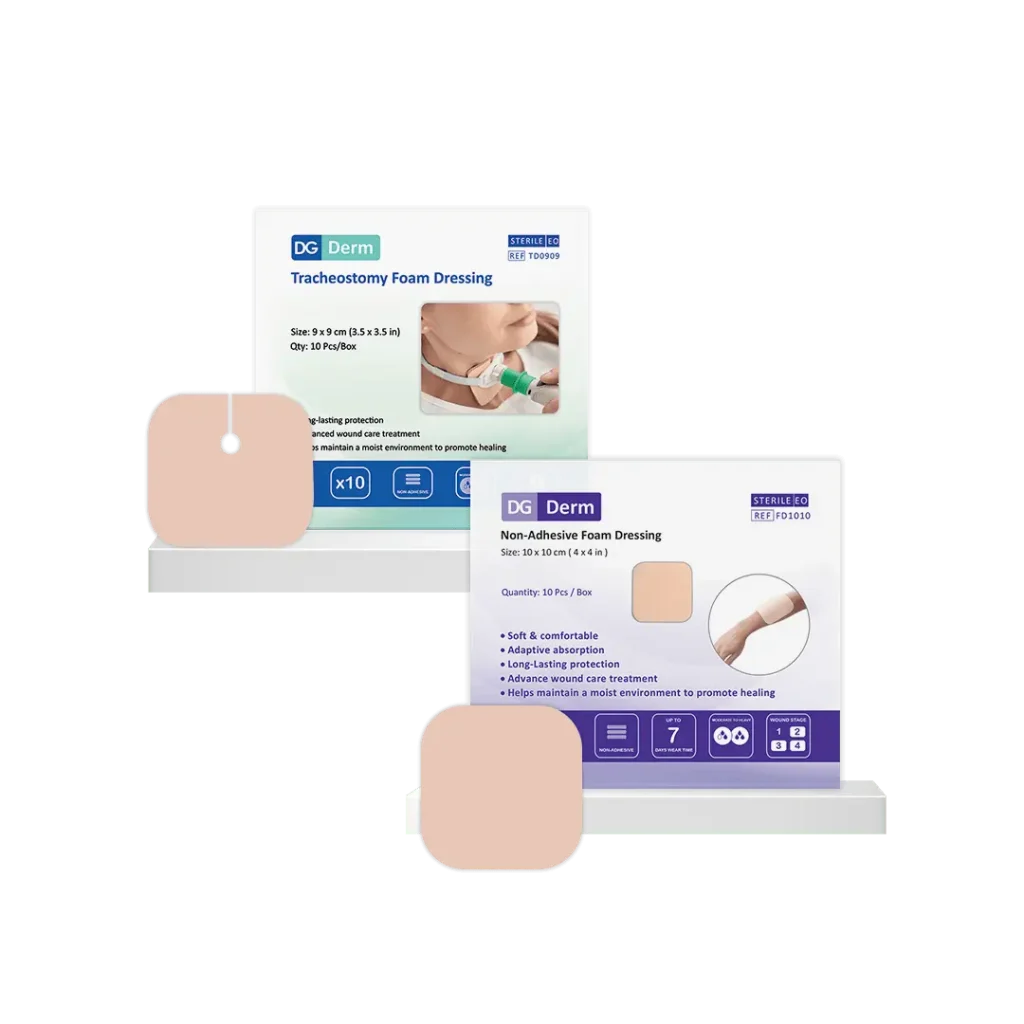
- Tracheostomy and gastrostomy-related wounds
- Highly exudative wounds and negative pressure wound therapy (NPWT) use
- Wound cavities
Foam dressings are also easily cut and can be shaped according to the wound size and configuration. Due to their thermal insulating properties, they can help maintain warmth in the wound area and promote faster healing.
How to Use the Non-Adhesive Foam Dressing
To ensure effective use, the following steps should be followed:
- Wash and dry your hands and wear gloves.
- Clean the wound using DG Derm wound cleansing solution to remove contamination and excess exudate.
- Dry the surrounding skin with sterile gauze.
- Select or cut an appropriate dressing size based on the wound dimensions. The dressing should be larger than the wound area (at least 1 cm beyond the wound edges).
- A secondary dressing may be used to secure the foam dressing in place.
DG Derm Tracheostomy Foam Dressing
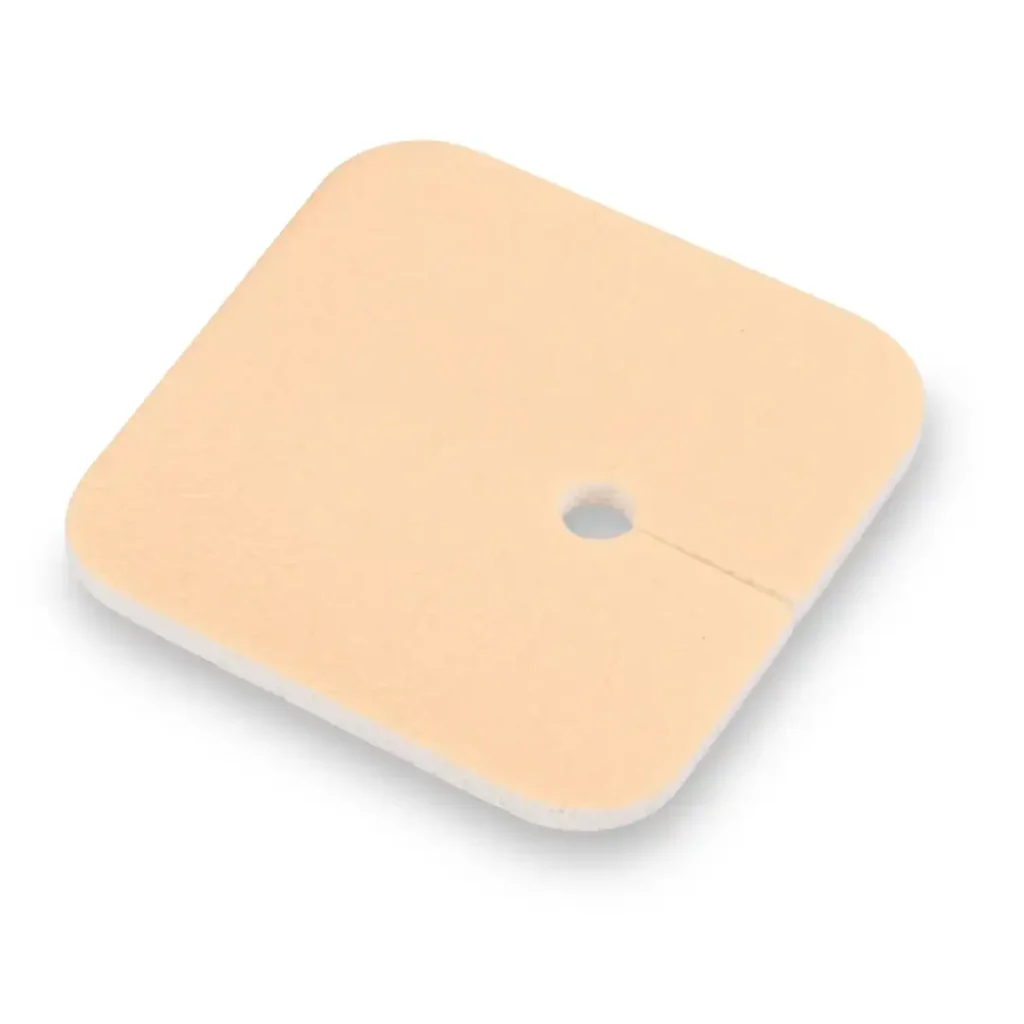
The DG Derm tracheostomy foam dressing is a polyurethane dressing designed for wounds around tracheostomy sites. It consists of the following layers:
- Outer layer: A waterproof and bacteria-impermeable polyurethane film that prevents fluid penetration into the wound.
- Contact layer: A highly absorbent polyurethane foam layer that absorbs wound exudate and does not adhere to the wound bed. This allows easy removal of the dressing and reduces patient pain during dressing changes.
Advantages of the Tracheostomy Foam Dressing
- Effective control of wound exudate
- Increased patient comfort during dressing changes
- Prevention of secondary wounds around the affected area
Indications for Use
- Tracheostomy-related wounds with moderate to heavy exudate
- Tracheostomy wounds with thin or fragile edges
- Tracheostomy wounds with leakage
Purchase of Non-Adhesive Foam Dressing
To purchase the DG Derm non-adhesive foam dressing, please contact the numbers listed here .